
How Canal+ Unmasks “The Scammer of Paris: Lies and Gastronomy,” a Gourmet Dream Turned High-End Fraud
On Wednesday, January 7, Canal+ is putting the spotlight on one of the most spectacular food-world frauds of the 2010s with the investigative documentary The Scammer of Paris: Lies and Gastronomy, directed by journalist-filmmaker Aurore Aubin. The film revisits a grandiose restaurant and luxury district that existed mostly on paper—but managed to seduce some of the most powerful circles in Paris before the truth came crashing down.
Blending true-crime storytelling with a deep dive into foodie culture and urban ambition, the documentary dissects how a supposedly visionary project in the heart of Paris morphed into a textbook case of manipulation, image-building, and collective wishful thinking.
A Prime-Time Deep Dive on Canal+
The Scammer of Paris: Lies and Gastronomy airs on Canal+ on Wednesday, January 7 at 9:09 p.m. The prime-time slot underlines how much this story resonated in France—especially among people who follow business news, cultural trends, and the ever-glamorous world of French cuisine.
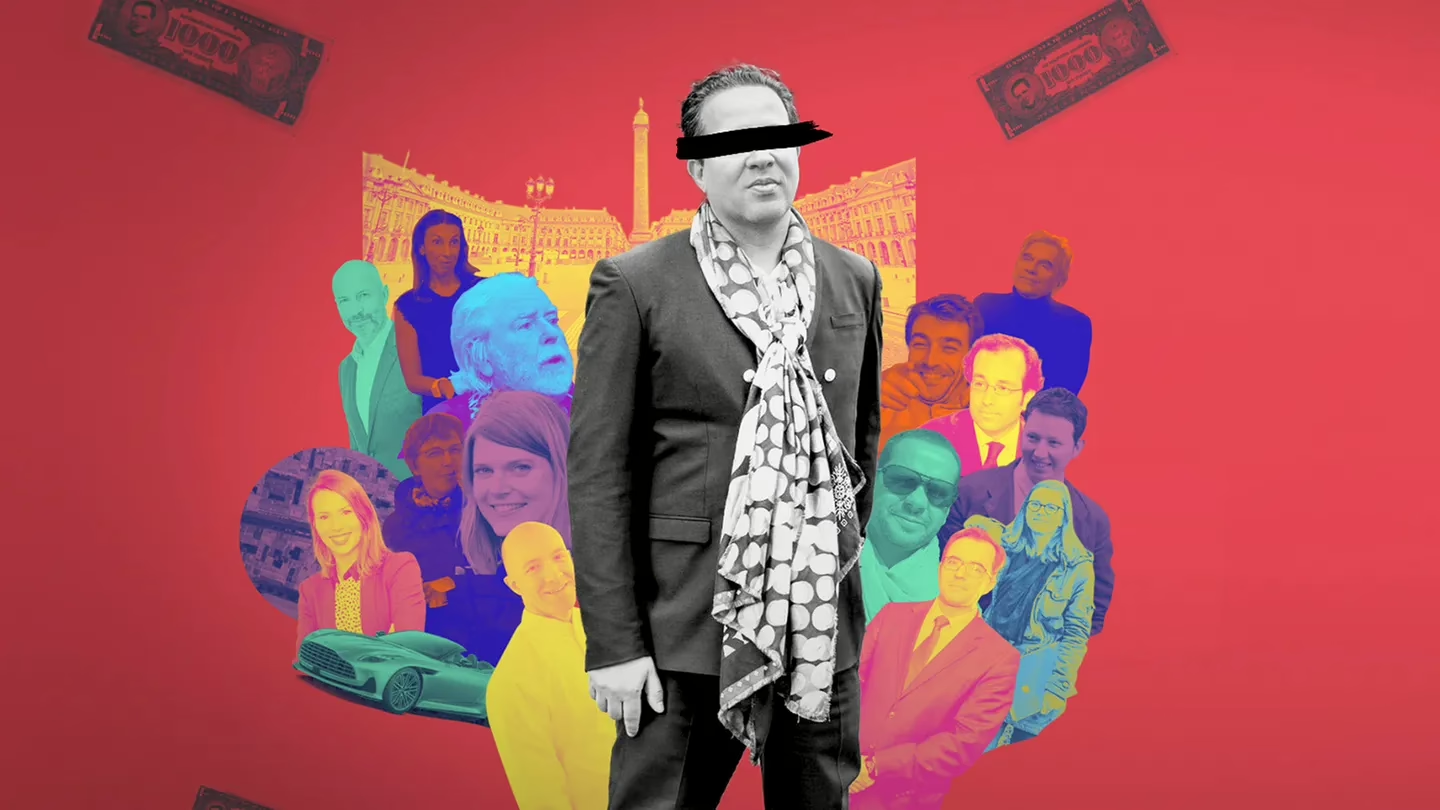
At the center of the film is Cédric Naudon, introduced at the time as a self-made multimillionaire who supposedly struck it rich in the United States. Around 2014, he became the face of an ultra-ambitious plan in Paris’s 3rd arrondissement, promising an unprecedented fusion of high-end dining, design, art, and luxury retail.
The Promise: Turning a Quiet Street Into a Global Gastronomy Showcase
The story begins on Rue du Vertbois, a relatively quiet street in central Paris. Naudon’s pitch sounded almost tailor-made for a lifestyle magazine cover or a glossy real-estate presentation: he would transform the area into a one-of-a-kind neighborhood dedicated to French excellence—think Michelin-starred chefs, cutting-edge design, art galleries, and luxury boutiques all concentrated in a few blocks.
According to the project’s public narrative, this district was meant to be a dazzling shop window for “Brand France”: a showcase for gastronomy, craftsmanship, and culture that would attract tourists, investors, and media attention from around the world. The planned investment ran into the tens of millions of euros, with major chefs and influential figures teased as future tenants and partners.
The formula worked. High-profile restaurateurs, investors, journalists, elected officials, and institutional partners quickly lined up, drawn in by a mix of national pride, business opportunity, and the allure of being associated with what looked like the next big thing in urban renewal.
They saw a bold gastronomic district for the 21st century. What they actually got, the film suggests, was one of the most sophisticated smoke-and-mirrors operations the Paris food and culture scene had seen in years.
Behind the Curtain: A Project Built Largely on Illusion
Aurore Aubin’s documentary gradually peels back the layers of this story, showing that the grand vision for Rue du Vertbois was far more illusion than reality. Through interviews, archival footage, and a meticulous timeline of events, The Scammer of Paris: Lies and Gastronomy walks viewers through how an idea that never truly existed on solid ground managed to look fully fleshed out to insiders and outsiders alike.
The Playbook of a High-End Con
The film highlights several key tactics allegedly used to give this non-existent gastronomic district an aura of legitimacy:
- A perfectly calibrated narrative: The project’s communication leaned heavily on buzzwords such as heritage, innovation, French savoir-faire, and culinary excellence—concepts that resonate deeply in both French and international media.
- Strategic networking: By tapping into the social and professional networks of the Paris elite—chefs, curators, business leaders, political figures—the project gained visibility, credibility, and a sense of inevitability.
- Announced deals that never fully materialized: The documentary revisits a series of promised investments, institutional partnerships, and financial commitments that, on closer inspection, were either weakly documented or never actually completed.
Step by step, the film shows that while the branding and storytelling were impeccable, the financial and operational backbone of the project was fragile at best. What looked like a visionary food district was, in reality, more of a narrative construct than a stable business venture.
Why So Many Smart People Fell for It
One of the most compelling angles of the documentary is not just how the alleged scam unfolded, but why it worked on people—many of whom are used to evaluating risk and spotting problems in ambitious proposals.
Aubin’s investigation suggests that the victims’ enthusiasm wasn’t just about money. It was about image, status, and the desire to believe in a story that felt perfectly aligned with the times: a creative, sustainable, culturally rich neighborhood putting French gastronomy back at the center of the global conversation.
In a media environment that loves “world firsts,” “concept neighborhoods,” and “flagship projects,” the Rue du Vertbois plan checked all the boxes. It captured a certain 2010s mood—where big urban projects, star chefs, and lifestyle branding often blurred into a single glossy narrative.
A Documentary About Storytelling Power in the Digital Age
Rather than focusing solely on the alleged fraudster’s personality, The Scammer of Paris: Lies and Gastronomy is also a film about the broader culture that allowed this story to thrive. The documentary follows a clear, fact-driven chronology, contrasting the promise-filled speeches and early media coverage with what later investigations uncovered.
For American viewers used to streaming true-crime and scam-related content—from financial fraud to influencer hoaxes—this French case will feel both familiar and distinct. The film touches on universal themes:
- How polished branding and visual storytelling can make almost anything look solid and real
- How prestige sectors like fine dining and luxury goods can serve as powerful trust-builders
- How urban development projects become symbols of national or city identity—and thus harder to question
The documentary also spotlights those who paid the price: chefs who invested time and reputation, professionals who changed plans based on promises, and institutions that found themselves associated with a project that, in the end, had no credible foundation.
French Gastronomy, Global Ambitions, and a Perfect Storm for Deception
To fully understand why this story hit such a nerve in France, the film situates the affair within a broader context. French cuisine still holds enormous symbolic weight, both domestically and abroad. Cities like Paris constantly compete to reinvent themselves with new cultural districts, food markets, and creative hubs.
In the mid-2010s, the combination of:
- the global prestige of French gastronomy,
- the rise of destination dining and food tourism,
- and the push for high-visibility urban transformation projects,
created the perfect environment for a grand idea like Rue du Vertbois to be embraced without enough skepticism. The film uses this case as a lens to ask broader questions relevant far beyond France: How do cities vet visionary projects? How easily can cultural pride and economic hopes be weaponized by skilled storytellers?
Who Should Watch “The Scammer of Paris: Lies and Gastronomy”?
Although produced by a French channel, the documentary has strong crossover appeal for English-speaking audiences, particularly those who are:
- Fans of scam, con-artist, and white-collar crime documentaries
- Interested in the behind-the-scenes workings of the restaurant and luxury sectors
- Curious about how media narratives and influencer networks can legitimize fragile projects
- Drawn to stories set in iconic global cities like Paris
Directed by Aurore Aubin, the film offers a restrained, reporting-first style rather than sensationalism. It aims to provide context and understanding more than simple shock value, making it particularly appealing to viewers who appreciate investigative journalism and nuanced storytelling.
Key Facts About the Documentary
- Title: The Scammer of Paris: Lies and Gastronomy
- Director: Aurore Aubin
- Genre: Investigative documentary / true-crime-style nonfiction
- Channel: Canal+
- Air date and time: Wednesday, January 7 at 9:09 p.m.
- Core subject: A fake gastronomic and luxury neighborhood project in Paris that captivated influential figures across business, cultural, and media circles before collapsing.
Why This Story Matters Now
Even though the events took place in the mid-2010s, the release of this documentary in early 2026 feels very timely. In an era where bold promises—from crypto ventures to mega real-estate projects—can go viral overnight, the Paris case serves as a cautionary tale about the cost of believing the story first and checking the facts later.
For media-savvy audiences in the United States and elsewhere, The Scammer of Paris: Lies and Gastronomy acts as a reminder that credentials, visuals, and high-status endorsements are not enough. Whether the subject is food, tech, or real estate, due diligence still matters.
FAQ
When is “The Scammer of Paris: Lies and Gastronomy” airing on Canal+?
The documentary is scheduled to air on Canal+ on Wednesday, January 7 at 9:09 p.m. in prime time, underscoring its importance in the channel’s lineup.
What is the core story behind the documentary?
The film revisits an elaborate scheme built around a supposedly groundbreaking gastronomic and luxury neighborhood in Paris. The project attracted chefs, investors, and public institutions before it became clear that the financial and operational basis for the venture was largely fictitious.
Who directed “The Scammer of Paris: Lies and Gastronomy”?
The documentary is directed by Aurore Aubin, who approaches the subject through detailed reporting, archival research, and interviews with those directly involved or affected by the failed project.
Why is this documentary relevant for American audiences?
Beyond its Parisian setting and focus on French cuisine, the film explores universal themes: how sophisticated narratives can fuel high-end fraud, why prestigious industries like gastronomy and luxury are fertile ground for scams, and how investors and institutions can be swept up by a compelling story—issues that resonate strongly in U.S. media, business, and cultural discussions.