
Why Drops of God Stood Out — And Why Its Return Matters
Adapted from the cult manga Kami no Shizuku, Drops of God carved out a distinctive space in the Apple TV+ lineup. It isn’t just another prestige drama: it mixes family saga, travelogue, and sensory storytelling centered on wine. Instead of relying on action or big plot twists, the show builds tension through tasting sessions, philosophical debates about legacy, and the emotional weight of every bottle opened.
Season 1 ended on the fallout of a brutal inheritance challenge designed by legendary wine critic Alexandre Léger. Season 2 picks up in the wake of that test, exploring not just who wins, but what victory actually means when identity, memory, and family ties are on the line.
The Legacy Game: Camille vs. Issei After Alexandre Léger’s Death
When Alexandre Léger dies, he doesn’t simply leave a will—he leaves a maze. At stake: a world‑class wine collection, a powerful name in the wine industry, and the philosophical vision he spent his life building.
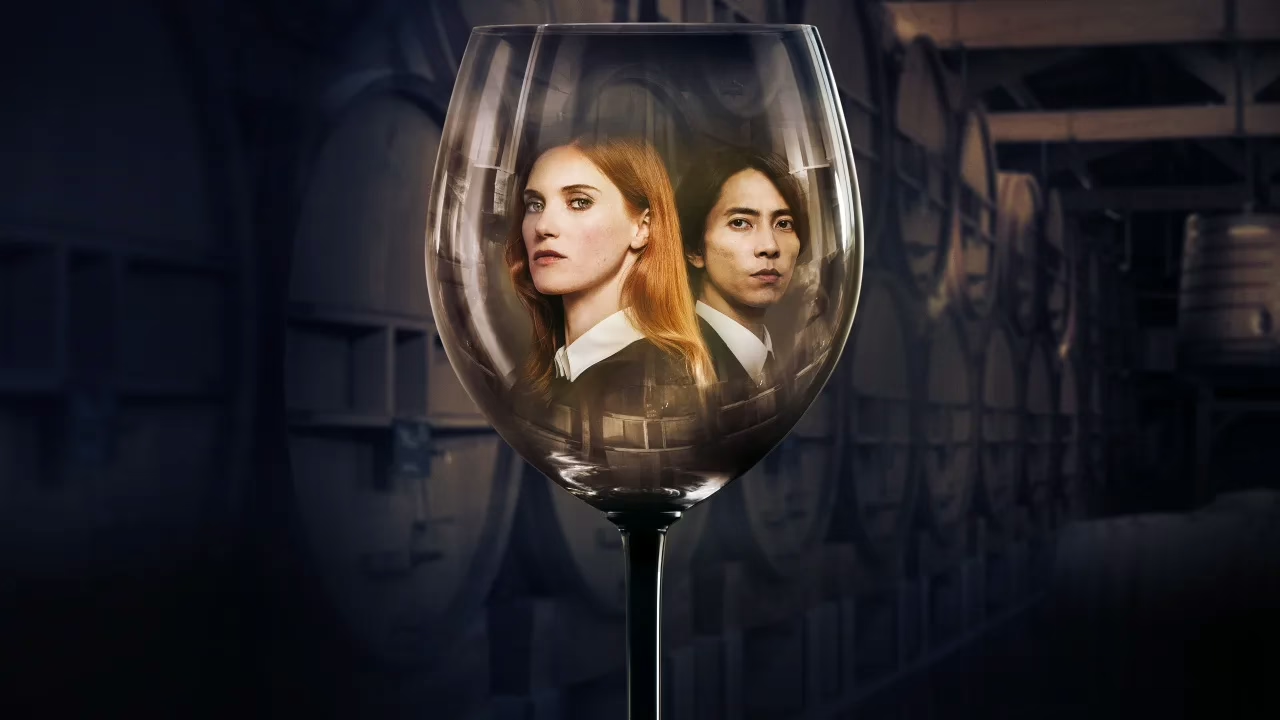
His daughter, Camille Léger (played by Fleur Geffrier), who grew up far from her father’s world, suddenly finds herself thrust into a contest she never asked for. On the other side is Issei Tomine (Tomohisa Yamashita), Alexandre’s spiritual son and protégé, who has been preparing his entire life—whether he wanted to or not—for exactly this kind of trial.
The framework is simple but ruthless: a series of wine‑based challenges that will determine who inherits Alexandre’s empire. The real narrative engine, however, is more intimate. Every tasting is less about recognizing notes of oak or cherry and more about forcing each character to confront who they are, what they owe to their parents, and what they’re willing to sacrifice for a legacy that might not even be theirs.
From Tokyo to Burgundy: A Cross‑Cultural Wine Journey
One of the reasons Drops of God has connected with viewers around the world—especially U.S. audiences who are used to traditional Hollywood storytelling—is its global perspective. The show is shot across Tokyo, Paris, and Burgundy, balancing epic wine landscapes with urban intensity.
Japan brings precision, restraint, and ritual. France brings centuries of wine tradition, emotional expressiveness, and a very different relationship to pleasure and taste. The series doesn’t flatten those differences; it leans into them. The result is a drama where every scene also feels like a small masterclass in how cultures approach craftsmanship, mentorship, and family duty.
For American viewers familiar with wine regions like Napa or Sonoma, Drops of God offers a deeper look at Old World wine culture without ever turning into a documentary. The travel, the vineyards, and the restaurants all serve character arcs first—but they also make the show catnip for anyone who loves food, wine, or thoughtfully shot location work.
Season 2: From Winning an Inheritance to Redefining “Family”
In Season 1, Camille’s primary goal is survival: learning enough, fast enough, to stand a chance in a game she barely understands. By the time we reach Season 2, that dynamic shifts. Camille is no longer just the reluctant outsider; she’s actively choosing what kind of relationship she wants to have with wine, with her father’s memory, and with the world that once excluded her.
The new season focuses on transmission—not just of money or a cellar full of rare bottles, but of ideas, values, and emotional baggage. What does it mean to inherit a vision you didn’t help build? Are you supposed to preserve it, transform it, or walk away from it entirely?
For Issei, the conflict becomes even more internal. Torn between expectations and personal freedom, he begins questioning not only Alexandre’s influence but also the role he’s been groomed to play. Can he step outside the shadow of the masters—both his biological family and his spiritual mentor—and decide what kind of life he wants?
Who’s Behind the Series? Creative Team and Cast
Drops of God is created by Quoc Dang Tran, known for projects like Marianne and Parallels. On Apple TV+, it stands out as one of the platform’s most polished international productions—a series that looks and feels like a high‑end feature film spread across multiple episodes.
The main cast includes:
- Fleur Geffrier as Camille Léger, the estranged daughter pushed into the wine world overnight.
- Tomohisa Yamashita as Issei Tomine, the brilliant but conflicted disciple of Alexandre Léger.
The production leans heavily on visual storytelling: carefully designed sets, atmospheric lighting, and quiet moments where a character’s silence says more than any monologue. That aesthetic, combined with multilingual dialogue and an international cast, has made Drops of God one of Apple TV+’s most distinctive offerings.
How Drops of God Turns Tasting Notes Into Storytelling
One of the show’s biggest strengths is how it transforms something as niche as wine tasting into gripping drama. You don’t need to know the difference between Burgundy and Bordeaux to feel the stakes.
The writing treats wine as a language. A glass can trigger childhood memories, reveal buried resentment, or expose the gap between who a character thinks they are and who they’ve become. Conversations around a bottle rarely stay technical for long—they slide into questions of identity, belonging, and purpose.
For U.S. viewers used to courtroom showdowns or fantasy battles, Drops of God offers another kind of duel: quiet, charged, and deeply emotional, with every decision echoing far beyond the dining room or tasting room.
Release Date, Platform, and What We Know So Far
Apple has officially confirmed that Drops of God Season 2 will premiere on January 21, 2026, exclusively on Apple TV+. At the time of publication, there’s no trailer yet, and Apple has kept detailed plot information under wraps.
What the company has teased, however, is a season focused on the aftermath of the initial duel and the evolving relationship between Camille and Issei. No longer just rivals, they’re now linked by the same inheritance—both materially and emotionally—forced to navigate a bond that is as much partnership as it is opposition.
Key Info at a Glance
- Title: Drops of God, Season 2
- Streaming platform: Apple TV+
- Release date: January 21, 2026
- Creator: Quoc Dang Tran
- Main cast: Fleur Geffrier, Tomohisa Yamashita
- Core themes: inheritance, mentorship, identity, wine, and cross‑cultural family drama
Why Season 2 Is Perfect Timing for Apple TV+
As streaming platforms compete for both global subscribers and awards buzz, Apple TV+ has leaned heavily on curated, visually rich series rather than sheer volume. Drops of God fits squarely into that strategy: it’s a prestige drama with international appeal, a recognizable source material, and a strong hook for wine lovers and drama fans alike.
Releasing Season 2 in January 2026 positions the show early in the year, where it can benefit from quieter release calendars and strong word‑of‑mouth from viewers looking for something more sophisticated than the usual binge fare. For American audiences, it’s also a compelling alternative for anyone who enjoyed shows like The Bear, Call My Agent!, or Tokyo Vice and wants another nuanced, globally minded series.
FAQ
When does Drops of God Season 2 come out on Apple TV+?
Drops of God Season 2 is scheduled to premiere on January 21, 2026, exclusively on Apple TV+. All viewing will require an active Apple TV+ subscription.
Do I need to know a lot about wine to enjoy the series?
No. While wine is at the center of the story, the show is built around character drama, relationships, and questions of identity. The wine elements are explained in an accessible way, so even viewers who rarely drink wine can follow and appreciate what’s at stake.
Is Drops of God based on a true story?
The series is not based on real people or events. It’s adapted from the Japanese manga Kami no Shizuku, which uses a fictional wine critic and his heirs to explore the culture, history, and emotion around wine.
Where does Drops of God take place?
The series unfolds across several major locations, primarily Tokyo, Paris, and Burgundy. These settings highlight the contrast and connection between Japanese precision and French wine tradition, giving the show its distinctive international feel.