
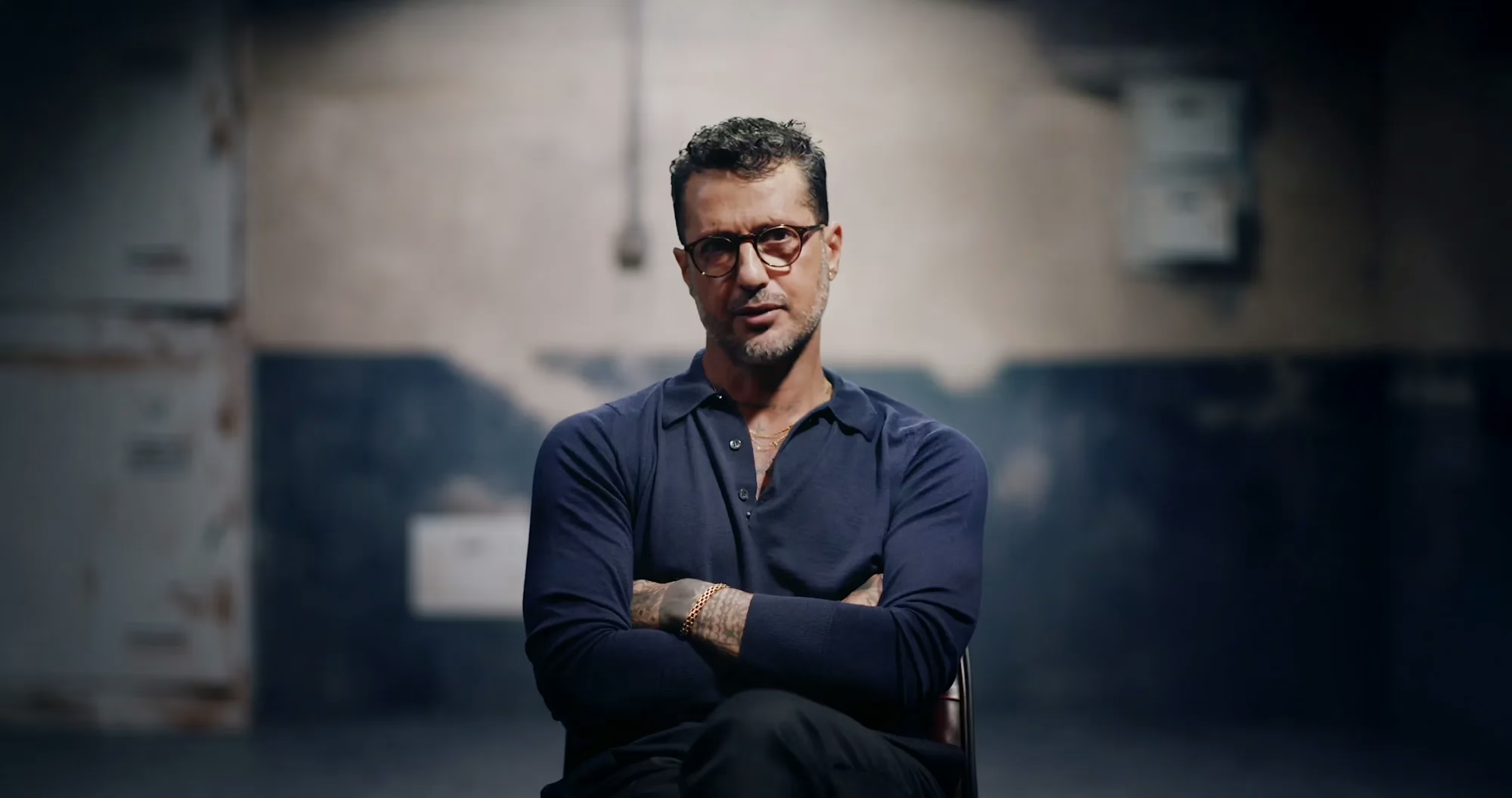
Starting January 9, Netflix is streaming the Italian docuseries Fabrizio Corona: the scandal is me, released internationally under the title Paparazzi King. Across five episodes, the show zooms in on one of the most polarizing figures in European tabloid culture and uses his story to explore how media, justice, and politics collided in Italy from the 1990s onward.
A docuseries about more than one man
Even though the series centers on Fabrizio Corona, it doesn’t unfold as a conventional, cradle‑to‑today biography. Instead, it positions his life as a lens on a broader moment in Italian public life, when lines between news, entertainment, and media manipulation steadily blurred.
The episodes move through key phases of recent Italian history, from the Berlusconi era to the rise of social networks, constantly raising the same uncomfortable question: how did a system made of TV, tabloids, and courts turn controversial personalities like Corona into both products and drivers of the culture?
Rather than isolating his personal path, the series embeds it in a media ecosystem where reality TV, celebrity gossip, and legal battles often occupy the same arena, creating a long‑lasting confusion between what really happened and what was staged for the cameras.
From family legacy to the business of scandal
To understand how Corona became such a lightning rod, the show goes back to his roots. He is the son of Vittorio Corona, a prominent journalist in the Italian press of the 1980s. Growing up, Fabrizio lived in the shadow of a respected father who eventually found himself sidelined by the very media environment he once helped shape.
This reversal becomes a defining moment in the documentary’s narrative: the marginalization of the father mirrors the son’s decision to weaponize gossip. The series tracks how Corona turns private information into a source of economic power, treating scandal as a structured business model rather than a by‑product of journalism.
Working with Lele Mora, Corona builds an empire based on trading in the intimate lives of celebrities. That system runs at full speed until it crashes into the Vallettopoli affair, when accusations of extortion transform Corona overnight—from backstage power broker to public enemy.
When trials become a permanent performance
From the moment Vallettopoli hits, the docuseries shifts focus to the way Fabrizio Corona reacts to his fall. Instead of stepping away from the spotlight, he leans into it, turning legal troubles into an ongoing media show.
Court hearings, headlines, and public statements are presented as parts of a continuous spectacle in which judges, journalists, and Corona himself are all on stage. The legal system and the media landscape don’t just intersect; they observe and feed each other in real time.
The series highlights how Corona meticulously scripts his own presence in the public eye, to the point where viewers are left questioning what is sincere, what is provocation, and what is pure fiction. His story becomes a case study for a larger theme: the shared responsibility of the press and the audience in building, consuming, and sustaining these narratives of scandal.
An ambitious Italian production for Netflix
Paparazzi King is produced by Bloom Media House. The series is directed by Massimo Cappello, who also co‑writes the project with Marzia Maniscalco. The artistic direction is handled by Davide Molla, with production oversight by Alessandro Casati, Marco Chiappa, and Nicola Quarta.
The five episodes arrive on Netflix on January 9, offering a deep dive into how notoriety, media exploitation, and legal drama collide. It’s a series aimed not only at documentary fans but also at anyone curious about how modern celebrity culture and information overload can spiral into systemic excess.
What Paparazzi King ultimately delivers is an unfiltered look at the gray zones of the Italian media circus—a world where scandal is currency, and the boundary between public interest and voyeurism is constantly renegotiated.
FAQ
When does Fabrizio Corona: the scandal is me start streaming on Netflix?
Netflix makes the documentary series available starting January 9.
How many episodes are there in Paparazzi King?
The series is structured in five episodes.
Is Paparazzi King a straightforward biography of Fabrizio Corona?
No. The docuseries uses Corona’s trajectory to explore how media and the justice system operate in Italy, rather than focusing solely on a chronological life story.
Who is the target audience for this Netflix docuseries?
The show is designed for viewers who enjoy documentaries and for anyone interested in the excesses and distortions of contemporary fame and information.