
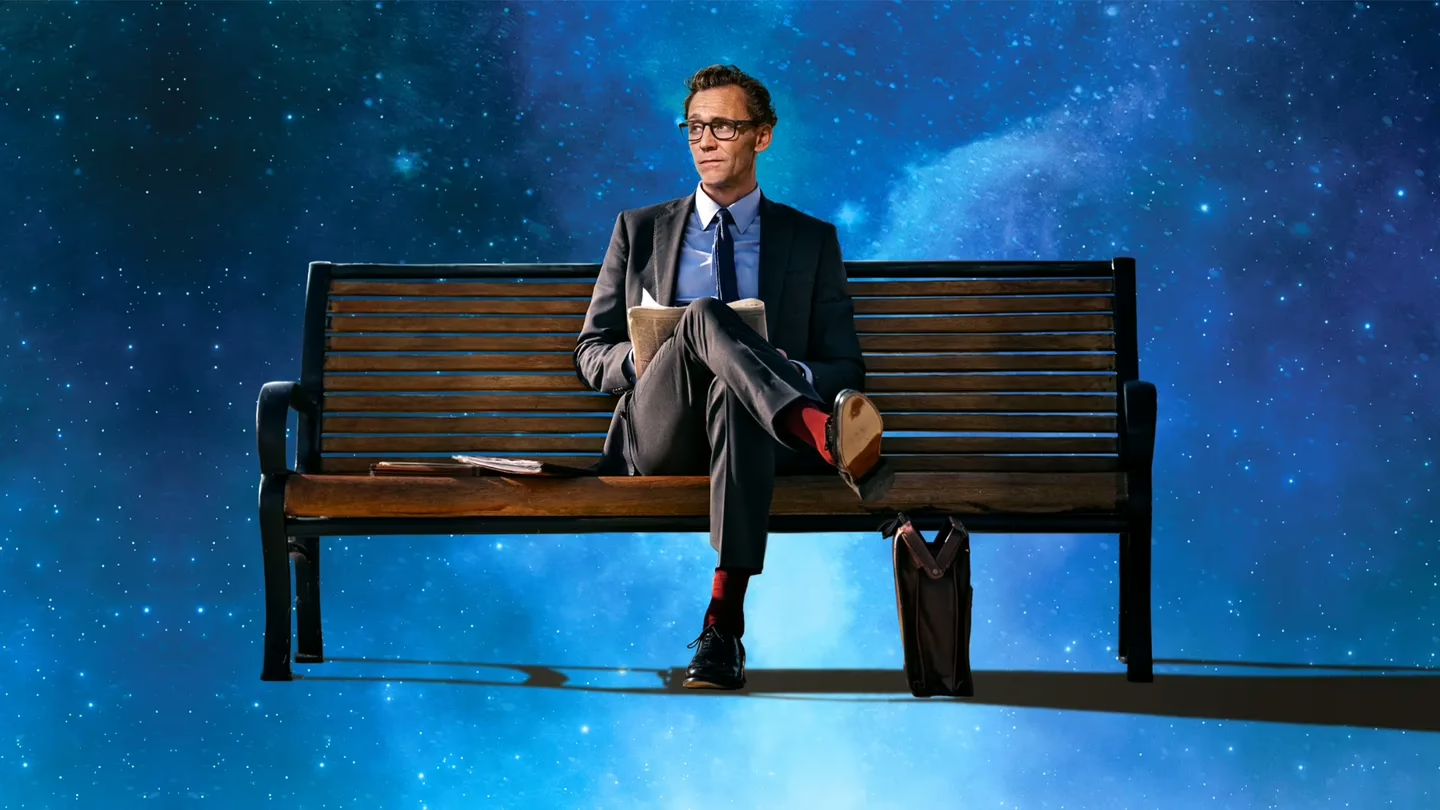
On Tuesday, January 6, Canal+ is airing Life of Chuck, Mike Flanagan’s 2024 feature based on Stephen King’s novella La Vie de Chuck, first published in the 2020 collection If It Bleeds. Far from the author’s blood‑soaked horror classics, this film leans into quiet fantasy, memory, and the strange beauty of an ordinary life coming to an end.
Why Life of Chuck Is One of Mike Flanagan’s Most Surprising Films
Viewers familiar with Flanagan through The Haunting of Hill House, Gerald’s Game, or Doctor Sleep might expect ghosts, jump scares, and elaborate set‑pieces. Life of Chuck takes a different route. It’s a character‑driven drama wrapped in a light supernatural sheen, more interested in asking what a single human existence means than in frightening the audience.
The movie follows Charles “Chuck” Krantz, played as an adult by Tom Hiddleston, and explores how his life intersects with a world that seems to be falling apart. Instead of leaning on horror tropes, Flanagan focuses on emotion, memory, and the way personal stories echo through the people and places we leave behind.
A Backwards Timeline That Starts with the End of the World
Structurally, Life of Chuck stands out right away. The narrative is broken into three clearly defined acts and unfolds in reverse chronological order. Rather than opening with Chuck’s childhood or a conventional origin story, the film throws us into a reality on the brink of collapse: strange phenomena, unexplained disasters, and a pervasive sense that something is fundamentally broken.
In the middle of this apocalyptic atmosphere, billboards and signs pop up everywhere carrying tributes to a man named Charles Krantz. They read like farewell messages or celebratory slogans, yet no one seems to know who Chuck is or why his name is suddenly everywhere. This bizarre, almost surreal marketing campaign becomes the audience’s first clue that the fate of the world and the fate of one man are somehow linked.
From there, the movie rewinds. Each subsequent act steps further back in time, peeling away layers of Chuck’s life: specific moments, relationships, and turning points that gradually explain why the world appears to be ending as his story winds down. By moving backwards, Flanagan invites viewers to reinterpret what they’ve already seen—turning what could have been a straightforward biographical drama into a puzzle about identity, legacy, and perception.
A Very Different Kind of Stephen King Adaptation
Stephen King is usually associated in the U.S. with works like It, The Shining, and Pet Sematary, stories that sit firmly in the horror canon. Life of Chuck comes from a different part of his bibliography—the more reflective, melancholic side that audiences also saw in The Shawshank Redemption or The Green Mile. While there are genre elements and a touch of the uncanny, the film is ultimately about human experience rather than monsters.
The core idea is simple but powerful: every person carries an inner universe built from memories, lessons, fears, and passions. Chuck’s journey illustrates how that inner universe can feel as significant as an actual world ending. The film follows this thread from childhood through adulthood, using small, intimate scenes rather than big spectacle to explore how we understand our own lives as they unfold—and how they look when we step back and see them whole.
Flanagan’s adaptation leans into King’s more philosophical impulses. Instead of underlining the horror of loss, it focuses on what remains: the stories people tell about us, the traces we leave behind, and the quiet connections that outlive us. It’s the kind of Stephen King movie that may surprise audiences expecting pure terror but will resonate with those interested in character and emotion.
A Stellar Ensemble Led by Tom Hiddleston
At the center of the film is Tom Hiddleston as adult Chuck Krantz. Known widely in the U.S. for his work as Loki in the Marvel Cinematic Universe, Hiddleston brings a more understated, grounded energy here. His performance tracks Chuck across key phases of his life, gradually revealing how an apparently ordinary man can carry extraordinary emotional weight.
The movie surrounds him with a strong ensemble cast: Chiwetel Ejiofor, Karen Gillan, Jacob Tremblay, Mark Hamill, and Mia Sara all appear at different points in Chuck’s timeline. Because of the story’s reversed structure, each actor’s scenes land with particular importance—they’re not just filling in gaps, but reshaping how we understand what we’ve already seen.
Flanagan keeps the direction controlled and intimate. Instead of flashy camera moves or heavy visual effects, he emphasizes faces, conversations, and quiet moments that linger. The score by The Newton Brothers supports this approach, offering a subtle musical backdrop that enhances the film’s emotional beats without overwhelming them.
Festival Buzz and Release Path Before Landing on Canal+
Life of Chuck first drew attention on the festival circuit. It premiered at the Toronto International Film Festival (TIFF) in 2024, where it won the People’s Choice Award—an indicator that the movie connected strongly with audiences rather than just critics. After its festival success, the film received a theatrical release in 2025.
The Canal+ broadcast in France gives the film a new window of visibility on the small screen, reaching viewers who may have missed it in theaters or who are discovering this more introspective side of both King and Flanagan for the first time. For American audiences, this trajectory is similar to many prestige genre titles: festival premiere, limited or wider theatrical run, then a key premium TV or streaming debut that helps build long‑term word of mouth.
What Makes Life of Chuck Worth Watching Now
Released in a moment when many viewers are drawn to big‑budget franchises and high‑concept sci‑fi, Life of Chuck stands apart by being smaller in scale but bigger in emotional scope. Its blend of fantasy and drama, the reverse structure, and the focus on one man’s life as a metaphor for an entire reality make it an intriguing option for fans of thoughtful genre storytelling.
For U.S. viewers who appreciate Stephen King’s more humanistic stories or who have followed Mike Flanagan’s evolution from pure horror toward more spiritual, character‑focused tales like Midnight Mass, this film feels like a logical—and moving—next step. It’s less about being scared and more about being confronted with how fleeting and meaningful existence can be.
Broadcast Details: When Life of Chuck Airs on Canal+
On Canal+, Life of Chuck is scheduled to air on Tuesday, January 6. This linear broadcast makes the film accessible to a broad French TV audience, while also reinforcing its status as a significant entry in Flanagan’s body of work. For those tracking international releases of Stephen King adaptations, this Canal+ slot highlights the continued global appeal of King’s storytelling—especially in forms that challenge expectations.
FAQ
When is Life of Chuck airing on Canal+?
The movie is scheduled to air on Canal+ on Tuesday, January 6.
Is Life of Chuck based on a Stephen King book?
Yes. The film adapts Stephen King’s novella La Vie de Chuck (published in English in the collection If It Bleeds in 2020).
Who plays Charles “Chuck” Krantz in the movie?
Tom Hiddleston portrays Charles “Chuck” Krantz as an adult, leading a cast that also includes Chiwetel Ejiofor, Karen Gillan, Jacob Tremblay, Mark Hamill, and Mia Sara.
Is Life of Chuck a horror film?
Not in the traditional sense. While it contains supernatural and fantastical elements, the film focuses more on drama, introspection, and the meaning of one person’s life than on conventional horror scares.