
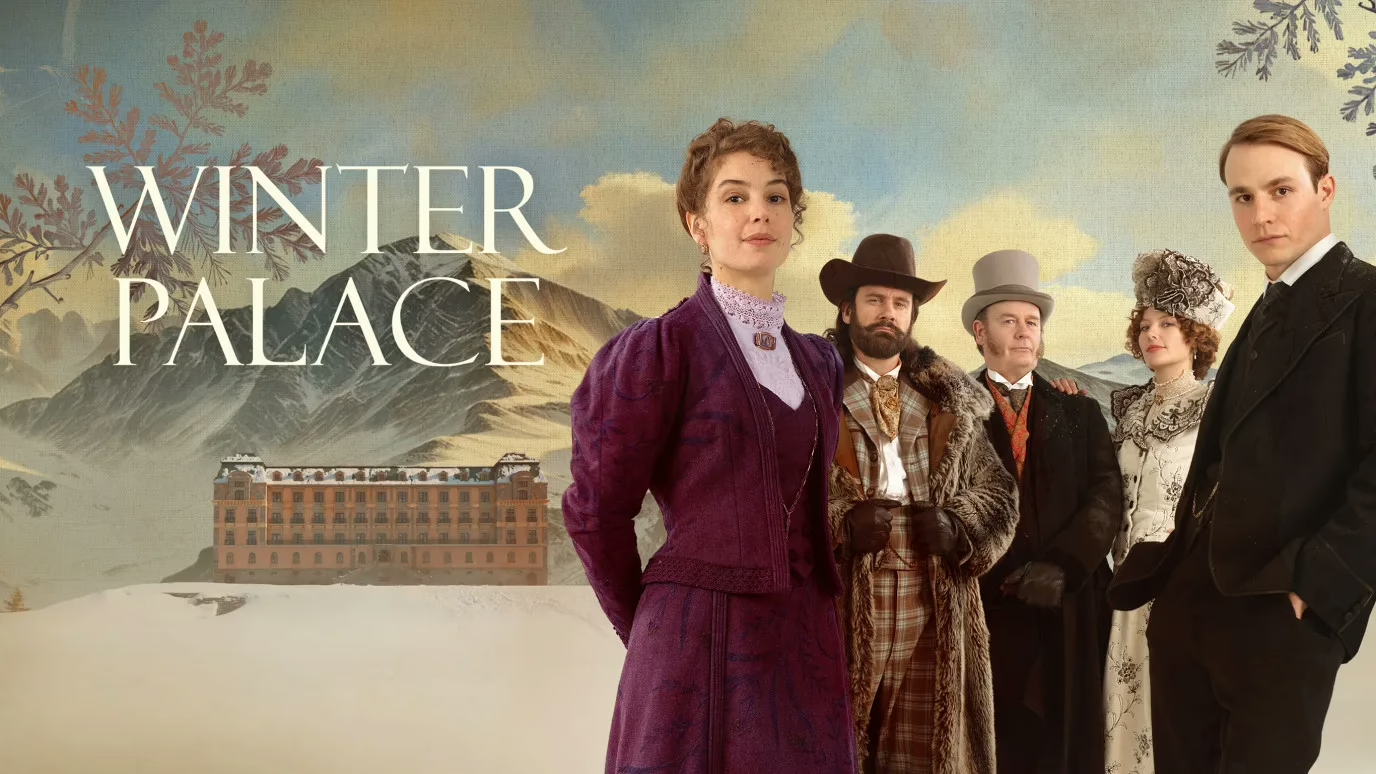
On December 24 and 31, starting at 9:00 p.m., French channel téva premieres Winter Palace, an eight-part period drama that rewinds to the late 19th century—when the idea of spending winter holidays in the Alps was still a radical gamble. Mixing historical reconstruction, social tension, and intimate drama, the series revisits the early days of luxury winter tourism in Switzerland through the story of a hotelier who dares to keep his five-star property open in the dead of winter.
Why “Winter Palace” Matters for Fans of Prestige Historical Drama
For viewers in the United States who enjoy series like Downton Abbey, The Gilded Age, or Hotel Portofino, Winter Palace taps into a similar vein: opulent settings, layered class conflicts, and characters caught between tradition and modernity. But instead of English countryside estates, the action is set in the Swiss Alps in 1899, at a pivotal moment when wealthy travelers begin to see snow-covered mountains not as hostile territory, but as a playground and status symbol.
The show dramatizes the birth of winter tourism as an economic and cultural revolution. While Americans today take ski resorts, luxury chalets, and winter getaways for granted, Winter Palace goes back to the very moment when that lifestyle was invented—and when betting on a winter season was closer to madness than to a business plan.
Setting the Stage: The Swiss Alps in 1899
The story unfolds in the Swiss Alps at the very end of the 19th century. At the time, mountain hotels typically operated only in the summer, when the weather was mild and travel less dangerous. Against this backdrop, the series introduces André Morel, a visionary hotel owner who decides to defy convention: he plans to keep his luxury hotel open all winter long, turning snow and extreme cold into a selling point rather than a threat.
His property is imagined as a five-star establishment decades before that label existed, designed to attract a wealthy, international clientele. The surrounding world, however, is far from ready: winter roads are treacherous, access is uncertain, ski equipment is primitive, and there are no ski lifts to whisk guests to the slopes. Morel is essentially trying to create a new market out of thin air—and out of deep snow.
A High-Risk Bet: When Luxury Meets Harsh Winter Reality
From the start, André Morel’s ambition clashes with the brutal realities of the mountains. Winter storms complicate every aspect of running the hotel: supplies are difficult to bring in, staff must work in dangerous conditions, and even keeping the building warm becomes a daily struggle. Instead of the glamorous, seamless luxury experience he promises, the hotel constantly flirts with chaos.
The staff, many of whom come from modest backgrounds and have only known summer work, suddenly face a much sharper level of pressure. Serving demanding guests in gowns and tuxedos while battling cold, fatigue, and fear of failure exposes cracks in the hotel’s polished façade. On top of all this operational tension, a tragic event shakes the establishment—a turning point that threatens not only Morel’s dream, but the fragile social equilibrium of the entire microcosm.
Official Trailer
Get a first look at the atmosphere, costumes, and sweeping Alpine landscapes in the trailer below:
Rooted in Real History: The Dawn of Winter Luxury Tourism
Although the characters and their personal stories are fictional, Winter Palace is loosely inspired by actual historical developments in Switzerland. In the late 19th century, a handful of bold hoteliers decided to experiment with year-round mountain tourism. Their idea—inviting wealthy foreigners to experience the snow, clean air, and high-altitude scenery as a form of luxury leisure—was revolutionary and risky, much like André Morel’s plan.
The series carefully recreates this formative period. Skiing appears in its most basic form, closer to an improvised activity than a structured sport. Mechanical lifts have yet to be built, forcing guests to climb slopes on foot. The clientele is largely English-speaking and affluent, echoing the reality of British and transatlantic travelers who were among the first to popularize Alpine winters as fashionable holidays.
By focusing on this transition, Winter Palace sheds light on how the modern concept of a winter vacation—luxury hotels, exclusive resorts, and curated snow experiences—emerged from a mix of entrepreneurship, class privilege, and technological change.
Class Divide and Power Games Behind the Hotel’s Doors
Beyond its historical backdrop, the show leans into sharp social commentary. Inside the winter hotel, the contrast between the lives of rich guests and those of the workers is stark. Guests enjoy lavish dinners, heated rooms, and entertainment, while the staff endure precarious working conditions and constant pressure to meet impossible standards.
This upstairs–downstairs dynamic echoes familiar themes for American audiences used to period dramas: conversations in sumptuous dining rooms sharply contrasted with whispered worries in cramped service hallways. The series examines how power operates in subtle ways—through money, social status, gender expectations, and the rigid etiquette governing interactions between employers, employees, and guests.
A Complex Lead: André Morel, Visionary or Obsessive Risk-Taker?
At the center of Winter Palace is André Morel, whose character drives much of the tension. On the surface, he is an ambitious entrepreneur determined to put his hotel—and by extension, his corner of the Alps—on the map. He dreams of attracting elite guests from across Europe and beyond, reshaping local life through tourism and economic growth.
But the series also exposes his fragility. Morel’s confidence gives way to doubt as financial pressure escalates, staff loyalty wavers, and personal relationships fray. His vision is admirable yet ruthless; he is willing to put his team and family through enormous strain to prove he was right to gamble on winter. Over eight episodes, his evolution invites viewers to weigh the cost of innovation: how far should someone go to disrupt an industry and secure their place in history?
Hidden Desires and Secret Alliances in a Frozen Microcosm
While the historical angle is a major draw, Winter Palace also invests heavily in character-driven storytelling. Behind the orderly surface of the hotel, alliances shift, forbidden romances blossom, and personal ambitions collide. The strict social codes of the era force many characters—especially women and lower-class employees—to navigate their dreams in hushed tones and stolen moments.
The show uses this closed setting to explore broader themes: emancipation, the struggle for autonomy, and the desire to break out of assigned social roles. Modern viewers can recognize contemporary issues—workplace hierarchies, economic inequality, gendered expectations—played out in corsets and tailcoats rather than in open-plan offices.
Air Dates and Viewing Details
Winter Palace is broadcast on téva over two consecutive Wednesdays: December 24 and December 31, starting at 9:00 p.m. (local channel time). The entire story unfolds across eight episodes, allowing room for both slow-burn character arcs and escalating tension inside the hotel.
While téva is a French channel, the subject matter—birth of winter tourism, class dynamics in a luxury setting, and a high-stakes entrepreneurial gamble—resonates broadly, especially for viewers in the U.S. familiar with iconic ski destinations from Colorado to Aspen and Lake Tahoe. Winter Palace offers a look at how that global culture of winter leisure was first imagined on the other side of the Atlantic.
From the Alps to Today: Why This Story Feels So Timely
Releasing the series at the end of December is no accident. As many viewers plan their own winter holidays, Winter Palace invites them to reflect on what lies behind the polished image of resorts and luxury hotels: risky investments, workers’ sacrifices, and the social inequalities embedded in travel culture from its very beginnings.
In an era when tourism, climate change, and sustainable travel are hot topics, revisiting the origins of winter tourism in the Alps gives historical depth to current debates. The series subtly asks: Who gets to enjoy these landscapes? Who profits from tourism? And who bears the hidden costs when a visionary idea collides with human limits and environmental realities?
Key Facts About “Winter Palace”
- Format: Period drama series
- Number of episodes: 8
- Setting: Swiss Alps, 1899
- Broadcast channel: téva
- Broadcast schedule: Wednesdays, December 24 and 31, from 9:00 p.m.
- Core themes: birth of luxury winter tourism, class conflict, entrepreneurship, social change
FAQ
When does “Winter Palace” air on téva?
The series is scheduled on Wednesday, December 24 and Wednesday, December 31, with episodes airing from 9:00 p.m. on the French channel téva.
How many episodes are there in “Winter Palace”?
Winter Palace consists of eight episodes, allowing the story to develop both the historical backdrop and the personal arcs of the main characters.
Is “Winter Palace” based on a true story?
The series is not a direct retelling of a specific real-life hotel, but it is loosely inspired by historical events tied to the emergence of luxury winter tourism in the Swiss Alps at the end of the 19th century.
What kind of viewers is “Winter Palace” best suited for?
The show will particularly appeal to fans of prestige historical dramas, viewers interested in the history of tourism and luxury hotels, and anyone who enjoys character-driven stories set against striking natural landscapes and complex social hierarchies.