
When Netflix dropped the British limited series Adolescence on March 13, 2025, it didn’t immediately look like a traditional awards juggernaut. Four tight episodes, a minimalistic concept, and a story centered on a 13-year-old boy accused of murder felt more like a niche festival favorite than a mainstream streaming hit. Yet less than a year later, at the 83rd Golden Globe Awards held on January 11, 2026, the show had become the most decorated TV title of the night.
Created by Jack Thorne and Stephen Graham, the series has turned into a cultural reference point for how television can tackle online radicalization, youth violence, and toxic masculinity—while still being bingeable, suspenseful, and visually bold. If you’ve been seeing Adolescence all over Netflix’s homepage, here’s why it matters, why awards voters fell in love with it, and what to expect next.
Golden Globes 2026: How “Adolescence” Became the Night’s Big TV Winner
At the 2026 Golden Globes, Adolescence didn’t just sneak in a token win—it essentially swept its field. In the Best Limited Series, Anthology Series or Television Film category, it took home the top prize, officially cementing it as the year’s must-watch limited series for awards voters and audiences alike.
Acting recognition played a huge part in that momentum. The performances are the engine of the show’s impact, and the Hollywood Foreign Press Association noticed:
- Stephen Graham — Best Actor in a Limited Series or Television Film
- Erin Doherty — Best Supporting Actress on Television
- Owen Cooper — Best Supporting Actor on Television
This trio of wins underscores how performance-driven the series is. While the one-take visual style gets a lot of buzz, it’s the actors—often navigating emotionally brutal, uninterrupted scenes—that make the experiment land so powerfully.
What “Adolescence” Is About: A Fictional Crime That Feels Uncomfortably Real
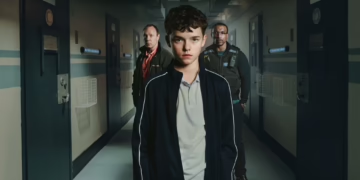
At its core, Adolescence is a crime story—but not in the way American viewers might expect from a typical true-crime docuseries or a courtroom drama. The show opens with the arrest of Jamie Miller, a 13-year-old boy accused of killing a classmate. From that moment on, the narrative stays tightly focused on the human fallout rather than procedural detail.
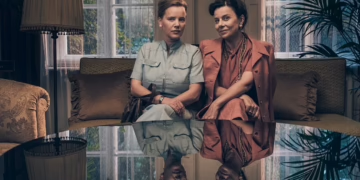
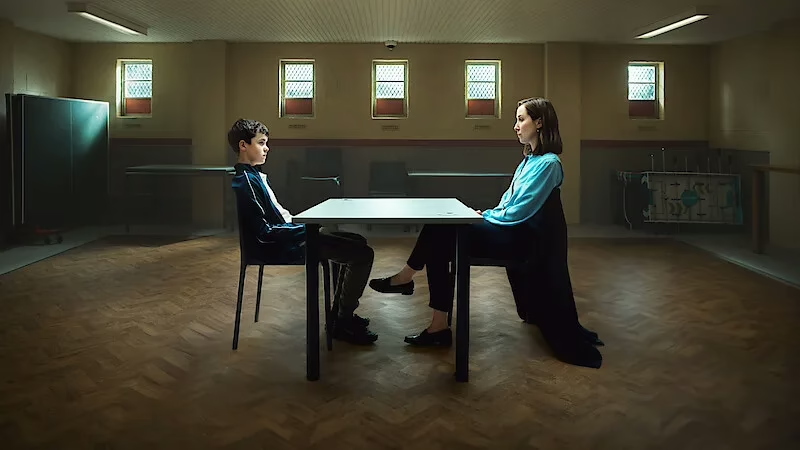
We see the case unfold from several angles: Jamie’s family, a police inspector, and a psychologist. Through them, the series unpacks the ecosystem that can surround a violent act: family dynamics, school culture, digital spaces, and the increasingly visible world of male-focused radicalization online.
Although the story is invented, it draws on contemporary UK cases and headlines. The creators avoid recreating a single real-life tragedy; instead, they distill recurring patterns—particularly around:
- The power and speed of social media to frame and inflame a case
- The rise of incel culture and online misogynistic communities
- New forms of male radicalization among teenage boys
For U.S. viewers, that’s part of why the show resonates beyond its British setting. The questions it raises—about algorithms, online hate, young masculinity, and how institutions respond—echo debates happening in American schools, homes, and legislatures as well.
Watch the trailer here:
A Bold One-Take Concept: Why Every Episode Is Shot as a Single Continuous Scene
One of the most distinctive aspects of Adolescence is its visual structure: each episode is designed as a single, unbroken long take. There are no visible cuts, no traditional coverage, and no editing that jumps around in time or perspective. Director Philip Barantini builds the show like a stage play captured in real time—except the camera is always moving, chasing and shadowing characters through homes, police stations, and school corridors.
For viewers used to heavily edited American dramas, that choice has a few major effects:
- Real-time tension: The absence of cuts makes conversations and confrontations feel like they’re unfolding live, with no escape routes for either the characters or the audience.
- Emotional claustrophobia: Scenes in interrogation rooms, family kitchens, or classrooms become more intense because there’s no relief from the camera’s gaze.
- Showcase for actors: Performers must sustain complex emotional arcs without a safety net, which is a big reason the series became a magnet for awards attention.
Rather than just a flashy stylistic gimmick, the one-take format mirrors the emotional experience of the story: once the event happens, no one can “cut away” from it. Families, institutions, and the public are forced to live through every minute of the aftermath.
Streaming Success: How “Adolescence” Turned Into a Global Netflix Hit
From its launch on March 13, 2025, Adolescence quickly surged to the top of Netflix’s charts, setting internal records for a limited series. For American subscribers, it joined the platform’s growing lineup of prestige British dramas that punch well above their episode count.
Several factors powered its rise through Netflix’s recommendation systems and into international trending rows:
- Tight runtime: Four episodes make it a low-commitment binge, ideal for weekend viewing or one intense evening.
- High-stakes subject matter: Stories about teenage violence, social media, and modern masculinity have built-in urgency for parents, educators, and younger viewers alike.
- Critical momentum: Positive reviews praised the writing, formal ambition, and emotional weight, fueling word-of-mouth and algorithmic boosts.
Critics singled out the show’s balance between raw emotional storytelling and formal daring. The script doesn’t treat its themes as a lecture; instead, they emerge organically from arguments around the dinner table, therapy sessions, and tense police interviews.
Beyond Entertainment: Political, Educational, and Social Impact
The conversation around Adolescence has spread well beyond TV forums and awards blogs. In the UK and across parts of Europe, the mini-series has become a talking point in political circles, media debates, and educational spaces.
Some institutions and educators have even floated or implemented the idea of showing the series in school settings to spark discussions about:
- Gender-based violence and misogyny
- The influence of online communities and extremist rhetoric
- The responsibility of schools, parents, and platforms in prevention
For American audiences, there’s a clear parallel to ongoing conversations about school safety, online radicalization, and how young people learn about gender, power, and relationships. While the legal systems differ, the emotional and cultural questions will feel very familiar to U.S. viewers.
Will There Be a Season 2 of “Adolescence” on Netflix?
Given the ratings success and the Golden Globes sweep, it’s no surprise that talk of more Adolescence picked up quickly. A second season is in development—but fans should not expect a direct continuation of Jamie Miller’s story.
The current plan is to pivot the show into an anthology format. That means:
- New storyline: Season 2 will revolve around a different case or situation, not a continuation of the original crime.
- New characters: A fresh cast will take center stage, though the same creative minds will shape the narrative.
- Same DNA: Expect the same focus on adolescent psychology, online and social dynamics, and the one-take formal approach that defines the brand.
For Netflix, that structure makes Adolescence flexible: each season can tackle a different facet of modern teenage life and digital culture, while the core tone and style stay recognizable. For viewers, it means every new batch of episodes can be approached as a self-contained event series.
Why “Adolescence” Belongs on Your Watchlist
If you’re wondering whether to hit play, here’s the short version: Adolescence is not easy viewing, but it’s essential viewing. It inhabits the same space as other prestige limited series that use a single story to illuminate broader societal fractures. The twist here is how directly it engages with the world today’s teens actually live in—one shaped as much by private chats and algorithmic feeds as by classrooms and family dinners.
For U.S. audiences navigating their own debates about social media regulation, school safety, and extremist content, the show functions as both gripping drama and a conversation starter. And if you’re interested in how far television craft can go—from performance to cinematography—it’s a showcase of what’s possible when formal experimentation and emotional storytelling work in tandem.
FAQ
Is “Adolescence” on Netflix based on a true story?
No. The story of Jamie Miller and the murder accusation is fictional. However, the writers drew inspiration from a range of recent real-world cases and social trends in the United Kingdom, especially around youth violence, online radicalization, and misogynistic communities. The show aims to reflect patterns and dynamics seen in real life without dramatizing a single specific case.
How many episodes does “Adolescence” have, and how long are they?
Adolescence is a four-episode limited series. Each episode plays out as a single continuous sequence, typically running close to an hour. That structure makes it a relatively quick but intense binge—many viewers watch the entire series over one or two evenings.
Why does “Adolescence” use a one-take style for every episode?
The single-take approach is central to the show’s identity. Director Philip Barantini uses it to keep viewers locked into the emotional and psychological present of the characters. With no visible cuts, conversations feel more authentic and claustrophobic, and actors must carry long, uninterrupted stretches of dialogue and emotion. The technique amplifies suspense and immersion rather than serving as a mere stylistic flourish.
Will the second season of “Adolescence” follow the same characters?
No. The planned Season 2 is being developed as part of an anthology approach. That means new characters and a new storyline, while preserving the thematic core—adolescence, digital culture, social pressure—and the bold formal style, including the real-time, one-take structure. Viewers can expect the same intense tone and social relevance, but with a fresh narrative.