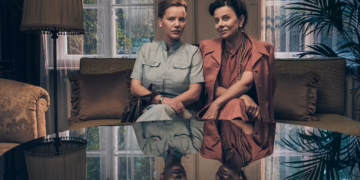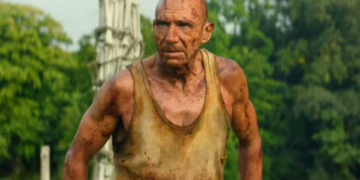

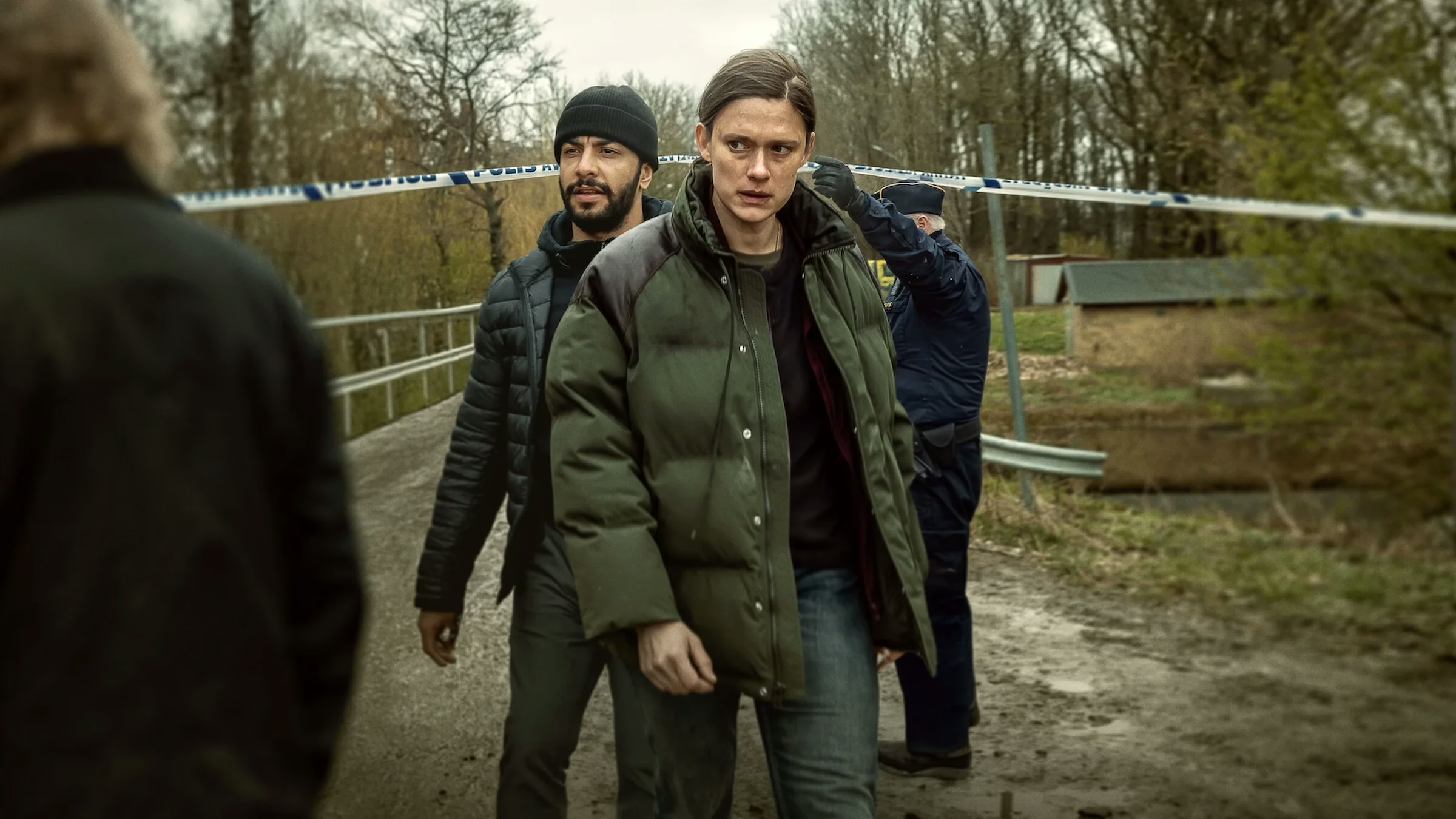
Netflix is opening 2026 with a bleak, character-driven crime story from Sweden. Land of Sin, created, written, and directed by Peter Grönlund (Goliath, Beartown), lands on the platform worldwide on January 2, 2026. Instead of another glossy procedural set in a big city, this limited series heads deep into the Scandinavian countryside to explore a community where blood ties, old grudges, and inherited shame matter more than the official rule of law.
What is “Land of Sin” about?
The series is set in the remote Bjäre Peninsula, a sparsely populated rural area where farms are isolated, neighbors know everything and say nothing, and power is concentrated in the hands of a few families. The story begins when Silas, a teenage boy, is found dead on a secluded farm. What could have been a straightforward crime scene quickly turns into something more tangled and emotionally charged.
The investigation is assigned to Dani, a sharp and notoriously difficult investigator, teamed up with Malik, a recently graduated young police officer still learning how to navigate real-world cases. As they move through this closed-off community, they discover that Silas’s death is tied to a long-running family conflict that has been simmering for generations rather than erupting out of nowhere.
Grönlund frames violence not as an anomaly but as something passed down, normalized, and protected by silence. Dani herself isn’t a neutral outsider: she has a personal connection to the victim that slowly destabilizes her professionalism and turns the case into a test of how far she’s willing to push, and what she’s willing to sacrifice, to get to the truth.
A tight limited series built for binge-watching
Land of Sin is structured as a short, intense viewing experience:
- Format: 5-episode limited series (mini-series)
- Inciting incident: the murder of a teenager on a remote farm
- Core tension: a powerful patriarch determined to handle the matter on his own terms, regardless of the law
Netflix has been leaning into compact, high-stakes stories that can be consumed over a weekend, and this show fits squarely into that strategy. With only five episodes, there’s little room for filler; the focus is on escalating pressure, small reveals that reframe what we think we know about the victim and the town, and the growing clash between official justice and local power structures.
Characters and cast: realism over glamour
Instead of star-driven spectacle, Land of Sin leans into grounded performances and a cast that will feel familiar to fans of Nordic drama:
- Krista Kosonen plays Dani, the lead investigator whose intelligence is matched by a prickly, confrontational temperament.
- Mohammed Nour Oklah is Malik, the rookie officer whose idealism collides with the messiness of small-town loyalties.
- Peter Gantman portrays Elis, the patriarch whose authority extends far beyond his household and weighs on nearly every decision made in the community.
True to his filmmaking approach, Grönlund also brings in several first-time or little-known actors. He has described this choice as a way to capture a kind of “essential fragility” on screen—performances that feel less polished and more lived-in, fitting the world of farmers, workers, and families who rarely see outsiders.
Visual style: when the countryside becomes a pressure cooker
For American viewers used to neon-soaked city crime stories, Land of Sin offers a different kind of menace. The show’s early footage emphasizes broad agricultural landscapes, distant houses dotting the horizon, and long stretches of emptiness. Yet these open spaces don’t feel liberating; they function more like traps.
The landscape is shot as a series of gray zones—fields, barns, and dirt roads where the line between private property and communal space is constantly negotiated. People are always being watched, even when there’s no one obviously around. Social rules, not written laws, decide who speaks, who stays quiet, and who can afford to defy the local elite.
Grönlund has been clear that he doesn’t want to replicate the safest, most formulaic pieces of the crime genre. He’s less interested in clever twists and more in what lies beneath everyday routines: the gestures, the silences at the dinner table, the shame people carry without ever naming it.
“This isn’t a standard crime show. We’ve tried to dig under the surface—under people’s gestures, under the silence of families, under inherited shame,” Peter Grönlund explains.
How “Land of Sin” fits into Netflix’s Scandinavian crime strategy
By launching Land of Sin globally on January 2, 2026, Netflix is clearly positioning the mini-series as one of its flagship early-year releases. It also signals where the streamer wants to take its Scandinavian lineup: shorter, denser, and more psychological.
Fans of Nordic noir will recognize several genre hallmarks: a harsh environment that shapes behavior, communities where everyone is connected by history, and institutions that often feel out of step with the informal power structures on the ground. But Grönlund pushes the focus further inward. Rather than building an intricate puzzle-box whodunit, he probes how grief, guilt, and generational conflict distort an investigation from the inside.
That makes Land of Sin particularly interesting for U.S. viewers who enjoy crime dramas like Mare of Easttown or True Detective—shows where the case matters, but the emotional fallout and social context matter just as much. The series functions both as a tense thriller and as a study of how a community’s unspoken rules can be just as brutal as any explicit violence.
Why American viewers should keep an eye on “Land of Sin”
From a U.S. perspective, Land of Sin checks several boxes that tend to resonate on streaming and in Google Discover feeds:
- Bingeable length: Five episodes make it easy to start and finish over a weekend without committing to a long-running series.
- Strong sense of place: The rural Scandinavian setting adds freshness for viewers tired of big-city cop shows.
- Character-driven storytelling: The personal link between Dani and the victim, plus Malik’s outsider perspective, offers emotional hooks beyond the central mystery.
- Social dimension: The patriarchal power struggles and generational feud give the show more to say than just “who killed whom.”
If you’re looking for something darker and more introspective than a formula procedural, but still want the tension and momentum of a crime story, Land of Sin is positioned as one of Netflix’s most promising early 2026 options.
Release details and how to watch
Land of Sin will be available worldwide on Netflix starting January 2, 2026. As a global Netflix original, it should arrive with multiple subtitle and dubbing options, allowing American audiences to choose between the original Swedish audio and English dubbing. With only five episodes, it’s designed to be easy to sample—and hard to stop once the first body is discovered on that isolated farm.
FAQ
When does “Land of Sin” premiere on Netflix?
Land of Sin premieres on Netflix worldwide on January 2, 2026. The mini-series is scheduled as one of the platform’s first major international releases of the year, arriving in the U.S. and other territories on the same date.
What is the main storyline of “Land of Sin”?
The show follows the investigation into the death of a teenager named Silas in a rural area of Scania, on Sweden’s Bjäre Peninsula. As investigator Dani and rookie officer Malik dig into the case, they uncover a long-entrenched family feud, a domineering patriarch trying to control the outcome, and a network of unspoken rules that threatens to derail the official investigation.
Who created and directed the series?
Land of Sin is created, written, and directed by Swedish filmmaker Peter Grönlund, known for his work on Goliath and the critically acclaimed series Beartown. He brings his signature focus on social tensions, realism, and morally complex characters to this new rural crime story.
How many episodes does “Land of Sin” have?
The series is a 5-episode mini-series. It’s designed as a closed, limited story with a clear beginning and end, making it ideal for viewers who prefer complete narratives over multi-season commitments.